Architecture
Governance accelerates through clarity
‘When governance is clear, the entire organization accelerates’ Governance often triggers resistance in organizations, says…
Read more
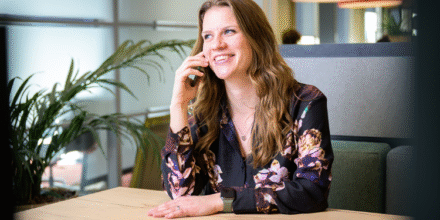


The role of the IT architect is changing rapidly due to dynamic systems and continuous technological innovation. In this interview, Ruud de Wit and Mirko van der Maat share how this reality shapes their perspective on modern IT architecture.
IT landscapes are moving faster than ever. While teams continuously release new features and technology evolves at lightning speed, static architecture can no longer keep up. Architects must provide direction without micromanaging, creating guardrails that enable change. Ruud de Wit and Mirko van der Maat share how architecture adapts to this new reality, and what that means for the profession.

The role of the IT architect has fundamentally shifted in recent years. For decades, architecture had a fixed place in IT initiatives: architects designed the structure and boundaries upfront, and only then did developers start building.
But this approach no longer holds in modern IT environments. Systems are constantly changing, even while in use. Teams work in short cycles, and technology evolves rapidly. Adjustments are more often the rule than the exception.
Architecture evolves along with it. The job is becoming less about designing systems in advance and more about creating and safeguarding the frameworks. Frameworks that IT architects define in close cooperation with the business and executive leadership, and that align with the organization’s strategic direction.
This shift in practice strongly influences how Ruud de Wit and Mirko van der Maat view IT architecture. Together, they are responsible for the architecture curriculum at Capgemini Academy.
They also bring nearly 50 years of combined experience to the table in large-scale architecture projects across a wide range of organizations. Besides being a trainer at Capgemini Academy, Mirko is a Customer Experience Solution Architect at Capgemini. Ruud’s second role is Enterprise Architect Director at Capgemini.
EA dual interview about the architect as the connecting link between teams, systems, and business decisions.
What are organizations doing differently with IT today compared to ten years ago?
Ruud: ‘Ten years ago, you could more or less rely on a fixed sequence. There was a project, a design phase, then development, and finally go-live. That separation has largely disappeared. Systems now change continuously, even while in use. Designing, building, and adjusting now happen in parallel.’
Mirko: ‘That reflects a broader context. Organizations as a whole operate in shorter cycles. They’re forced to: technology keeps advancing quickly, so you need to be able to adjust.’
The world is changing, IT is changing…
Mirko: ‘n the past, everything had to be fixed upfront. Any change during development caused frustration: another change, another debate, more delay, more hassle. It was paralyzing. That’s one of the reasons organizations shifted to another way of working.’
Flexibility sounds great, but is it? How do you maintain control over large, complex IT landscapes when they keep changing?
Mirko: ‘It’s crucial that architects operate at the right level. That means avoiding micromanagement. Think of construction: an architect doesn’t decide where every outlet or pipe goes, but they do determine the structure, where functions belong, how components relate, what the guiding principles are. You intentionally leave many details to other disciplines.’
Ruud: ‘ou’re not trying to make everything flexible. You distinguish between decisions that must be fixed for the entire organization, because they have major consequences, and those that should stay close to the teams, so they can adapt without affecting the whole.’
Systems keep changing. How does that fit with the idea that not everything should be flexible?
Ruud: ‘You embrace the need for adaptability at the system level in your plans. In the past, the goal was a final target architecture. Adjustments along the way were treated as problems. Now, you don’t design a fixed end state, you design a framework that allows components to change without collapsing the whole. Change becomes the starting point.’
So there’s no end plan anymore?
Ruud: ‘There is still a north star. But it no longer consists of one rigid end design. It’s about the big choices: where we’re headed, which core systems we want to use, which architectural principles lead us, and which agreements apply organization-wide.’
Mirko: Think of how data is shared, how security is organized, and where teams have freedom. Within those agreements, details can change along the way without needing to reopen the whole discussion.’
Another topic: IT projects were notorious for budget overruns. Isn’t that risk greater now that systems are constantly evolving?
Ruud: ‘No. In the past, a project could run for years before it became clear that costs were spiraling. Then you’d get the debate about whether the system was delivering any value. Now, with well-structured processes, everything is more transparent. You don’t work with a single fixed budget for a fixed plan. You budget incrementally. That allows you to adjust, for example by shifting funding to applications that turn out to matter more.’
Mirko: ‘And in a good process, everyone works in shorter cycles. That includes explaining where the money is going.’
Let’s get practical. You said: ‘if the process is set up properly.’ What does that look like?
Ruud: ‘Clear agreements are essential. There are different types of architects: enterprise architects who look across the entire organization, and solution or domain architects who work closer to systems and teams. They don’t operate in isolation; they work together, with product owners, developers, security specialists, and the business.’
Mirko: ‘These conversations aren’t about one person imposing a design, but about aligning roles. Who makes product decisions? Who assesses impact on existing systems? Who decides when multiple domains are affected? How do we document things so that people joining later still understand what’s going on?’
Ruud: ‘High-quality decision-making is vital. Be very clear about where and when these questions are discussed, and who decides.’
Who keeps the overview?
‘The enterprise architect. That’s truly cross-silo work. You don’t look from the perspective of one system or one team, you oversee the whole. Because everyone naturally reasons from their own domain, you need someone who connects the dots and maintains coherence.’
Sounds like a great job. How do you become an architect?
Ruud: ‘Education is hugely important, but it’s not everything. You can learn frameworks and understand models, but enterprise architecture requires experience, a lot of flight hours.’
Mirko: ‘Only after working in different roles, development, operations, working with the business, do you really see the interdependencies and understand the impact of decisions, including where things get stuck in practice. Experience brings context and oversight.’
What kind of people are drawn to this field?
In training programs, we often see professionals who want to become architects and come from a technical background, as well as professionals who need to collaborate with architects and want to understand what architects actually do and how to work effectively with them. We also see broader interest from people who come from specialties such as software development or business analysis and want to understand the bigger IT picture, and contribute to it.’
And once you choose this path, you get a role with a lot of responsibility!
Ruud: ‘Yes. And a role that’s only becoming more important. Take fast-moving technologies like AI. You can’t just experiment lightly, it affects data, processes, regulations, and reputation. At that point, it’s no longer about technology; it’s about direction.’
Mirko: ‘And that direction needs ownership. That’s why architects are increasingly joining conversations at the management and executive level. Not to explain what’s technically possible, but to discuss what the organization should or shouldn’t do, and why. You ask leaders: ‘What do you want to stand for?’ That’s when the real conversation begins.’
Ruud: ‘Architecture is no longer purely an IT concern, it’s increasingly about the business value you can create with technology. And that ties directly into executive decision-making.’
Are you an IT architect ready for your next step, looking to deepen your expertise, or curious about what the evolution of IT architecture means for your organization?
Capgemini Academy offers training programs and custom learning paths that match today’s reality. Whether you have a concrete interest or simply want to explore possibilities, feel free to get in touch with us!